


Supportive Ayurvedic Care for Lumbar Spondylosis and Disc Problems
Lower-back conditions can affect movement, comfort and daily activities. At Shanta Ayurveda Hospital, supportive Ayurvedic care is personalised after consultation and planned alongside appropriate medical assessment and ongoing treatment.
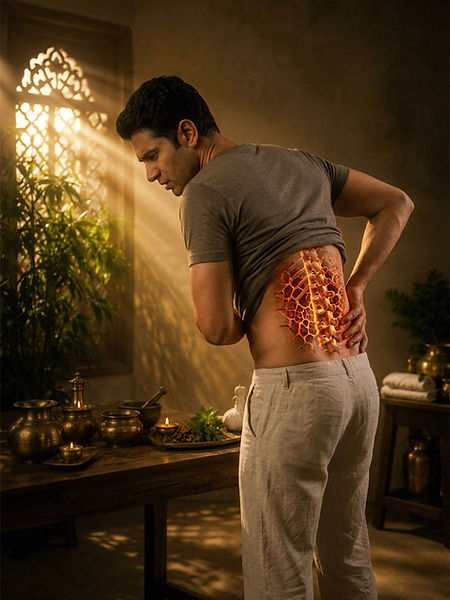
Understanding Lumbar Spondylosis and Disc Problems
Lumbar spondylosis describes age-related changes in the lower spine, while disc problems may include bulging or herniated discs. These findings do not always cause symptoms, but some people experience lower-back pain, stiffness, leg pain, tingling, numbness or weakness when a nerve is irritated or compressed. Diagnosis is based on symptoms and examination, with imaging used when clinically necessary.
Common Symptoms of Lumbar Spondylosis and Disc Problems
• Lower-back pain or stiffness
• Pain spreading into the buttock or leg
• Tingling or numbness in the leg or foot
• Difficulty bending or straightening the back
• Muscle weakness
• Pain that worsens with certain positions or activities
• Reduced ability to sit, stand or walk comfortably
• Recurrent episodes of back discomfort
Numbness around the genitals, loss of bladder or bowel control, inability to pass urine or rapidly worsening leg weakness requires emergency medical care.
Understanding Lumbar Spine Concerns Through Ayurveda
Ayurvedic supportive care is planned after reviewing the pattern of pain, neurological symptoms, physical activity, work demands, sleep, medical history, medicines and available reports. The aim is to support comfort, movement and daily function while avoiding fear-based or overly aggressive treatment.
Ayurvedic care does not replace physiotherapy, pain management, neurological assessment, imaging or surgery when these are medically indicated.

Factors Reviewed Before Planning Supportive Care
• Duration and severity of back pain
• Leg pain, tingling, numbness or weakness
• Bladder, bowel or saddle-area symptoms
• Recent injury, fall or heavy lifting
• Fever, unexplained weight loss or night pain
• Work posture and prolonged sitting
• Physical activity and muscle strength
• Previous spine treatment or surgery
• Scan findings, where available
• Current pain medicines and medical conditions
Serious neurological or systemic warning signs must be assessed before any Ayurvedic therapy.
Our Supportive Ayurvedic Approach
At Shanta Ayurveda Hospital, supportive care may include:
• Detailed Ayurvedic and musculoskeletal consultation
• Review of neurological symptoms and available reports
• Personalised Ayurvedic medicines, where appropriate
• Guidance on safe movement, posture and activity
• Gentle therapies selected according to pain and sensitivity
• Support for sleep, stress and daily routines
• Advice on gradual return to activity
• Coordination with physiotherapy, orthopaedics or neurology
• Monitoring of leg strength and sensation
• Referral for urgent assessment when warning signs are present
Prescribed medicines and physiotherapy plans must not be stopped or replaced without medical advice.
Supportive Ayurvedic Therapies, When Appropriate
Depending on the diagnosis, pain pattern, neurological findings and individual tolerance, supportive therapies may include:
• Kati Vasti
• Gentle Abhyangam
• Pizhichil
• Podikizhi or selected Kizhi therapies
• Mild Swedana
• Matra Vasti or other Vasti procedures, only when prescribed
• Gentle relaxation therapies
Forceful manipulation, strong massage and intense heat are avoided when pain is acute or neurological symptoms are present. Therapy is not appropriate during suspected cauda equina syndrome, fracture, infection, severe weakness or medical instability.
Frequently Asked Questions
Are lumbar spondylosis and a slipped disc the same?
No. Spondylosis refers to age-related spinal changes, while a disc may bulge or herniate and sometimes irritate a nerve.
Do scan findings always explain back pain?
No. Degenerative changes are common and must be interpreted together with symptoms and examination findings.
Can Ayurveda replace physiotherapy or surgery?
No. Ayurvedic care is supportive and does not replace physiotherapy, medicines, injections or surgery when medically required.
Should I stay in bed until the pain disappears?
Prolonged bed rest is generally not recommended. Activity should be gradually resumed according to symptoms and professional advice.
Which symptoms are an emergency?
Loss of bladder or bowel control, inability to pass urine, numbness around the genitals or rapidly worsening leg weakness requires emergency care.
Is Kati Vasti suitable during severe pain?
Suitability depends on the diagnosis and examination. It may be postponed when pain is acute, unexplained or associated with neurological warning signs.

Why Choose Shanta Ayurveda Hospital?
Located in T Nagar, Chennai, Shanta Ayurveda Hospital is committed to providing authentic
Ayurvedic care through personalized treatment plans, traditional therapies, and a patient centered
approach. Our focus is on understanding each patient's unique health concerns and developing
individualized treatment strategies that support long term wellness and quality of life.